I read a lot of balance board reviews before I bought one, and they all told me the same two things. First, the no-skid surface would keep my feet planted. Second, a minute or two most days would steady my wobble. Both turned out to be only half true, and the half they left out is the part worth knowing before you hand over your money. This is the review I wish I had found first.
I am Evelyn Marsh, 58, from Mesa, Arizona. Four years ago a lower-back episode ended a decade of training at a commercial gym, and I rebuilt my whole routine in the garage with a squat stand, an adjustable bench and free weights. Balance was the first thing to go quiet after the back trouble, and it is the piece most of us ignore until a stumble reminds us it matters. I have used this EVERYMILE board nearly every day for three months, some days by my standing desk and some days in front of the television, and I now know exactly where it earns its keep and where the listing oversells it.
I want to say up front what this review will not be. It will not tell you that ten minutes a day will fix your balance, because ten minutes a day almost never happens and balance does not run on a timer. It will not tell you the board is dangerous, because it is not, once you respect the wobble. It will tell you honestly what the listing gets right about the surface and what it quietly leaves out, so you can decide with your eyes open rather than after your money is spent. That is the whole job of this page, and it is the one place I will not cut corners.
The Quick Verdict
A genuinely useful board for daily balance work once you get past week one, but the no-skid surface wears faster than the photos suggest and it is a slow tool, not a quick fix. Buy it for the wobble, not the hype.
Amazon Check Today's Price →You Are Probably Worse at This Than the Listing Implies. So Am I.
The every-mile board is a real way to rebuild your balance when the wobble is unflattering. See what it costs today and read the honest cons again before you commit.
Amazon Check Today's Price on Amazon →How I've Used It
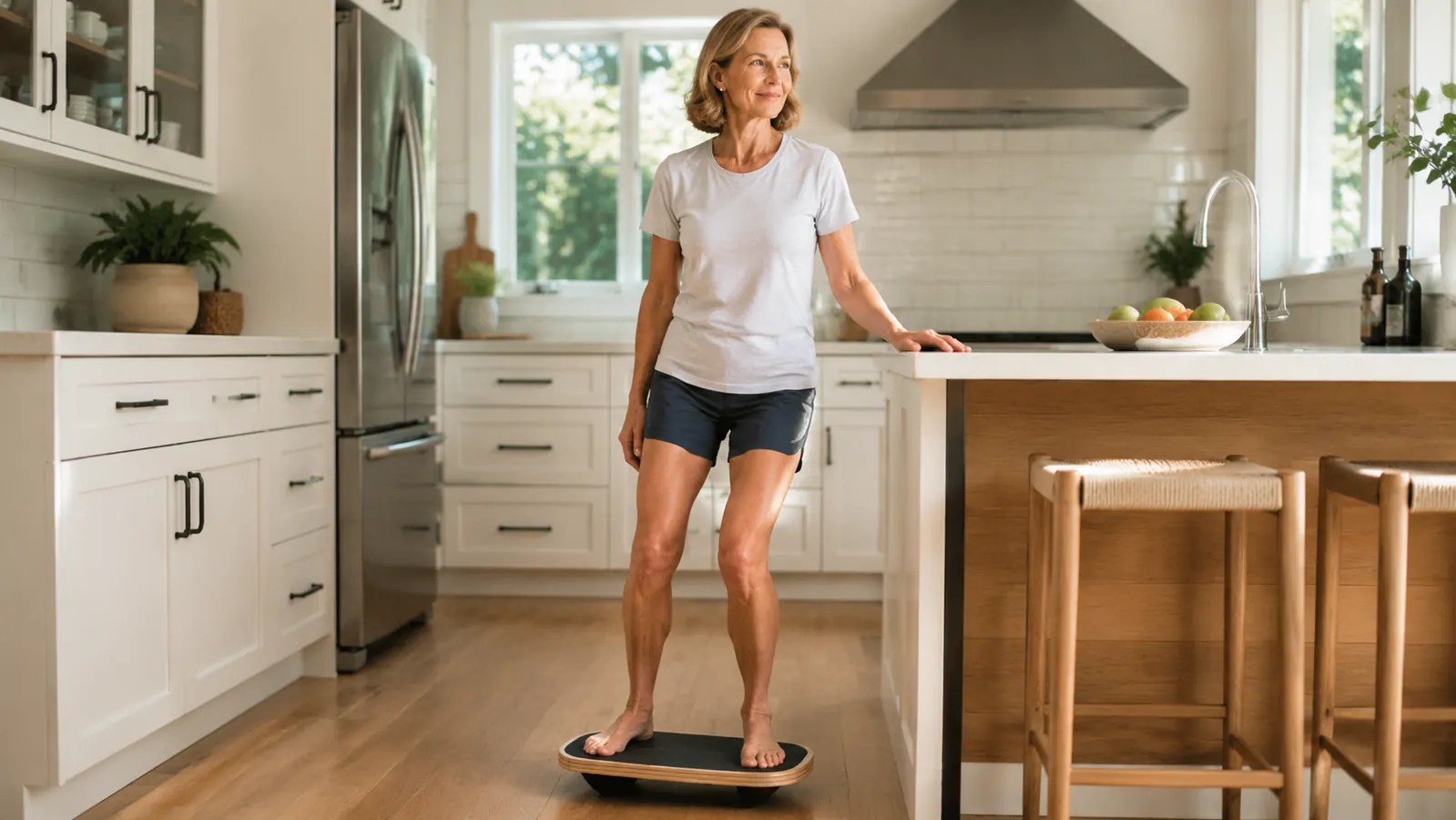
Three months of use, and almost every day. My setup is boring on purpose: the board lives beside my standing desk, and I rock on it in short bursts throughout the day. Twenty or thirty seconds here, a minute there, usually barefoot and always within reach of the desk edge or a wall. I also spent two weeks doing nothing but stand on it with both feet while brushing my teeth, which sounds ridiculous until you try holding a toothbrush and staying still at the same time.
I did not time a single session longer than about four minutes, because I did not need to. Balance work is not endurance work. The benefit comes from the constant small corrections your ankle, hip and core make the whole time you are up there, and those happen in the first sixty seconds. What surprised me was how hard that first minute stayed for a while. Day one I was off the board within ten seconds, gripping the desk with both hands.
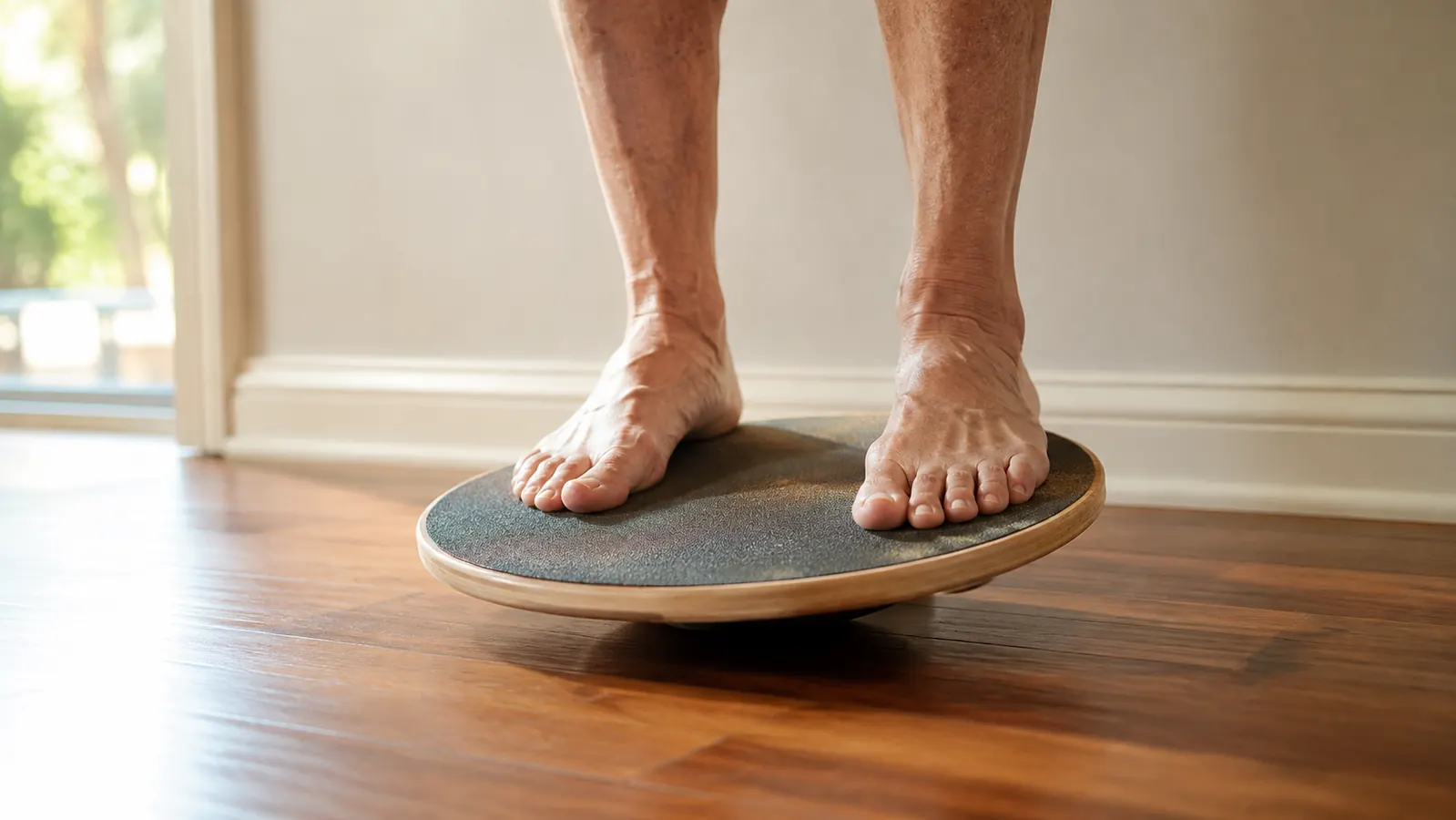
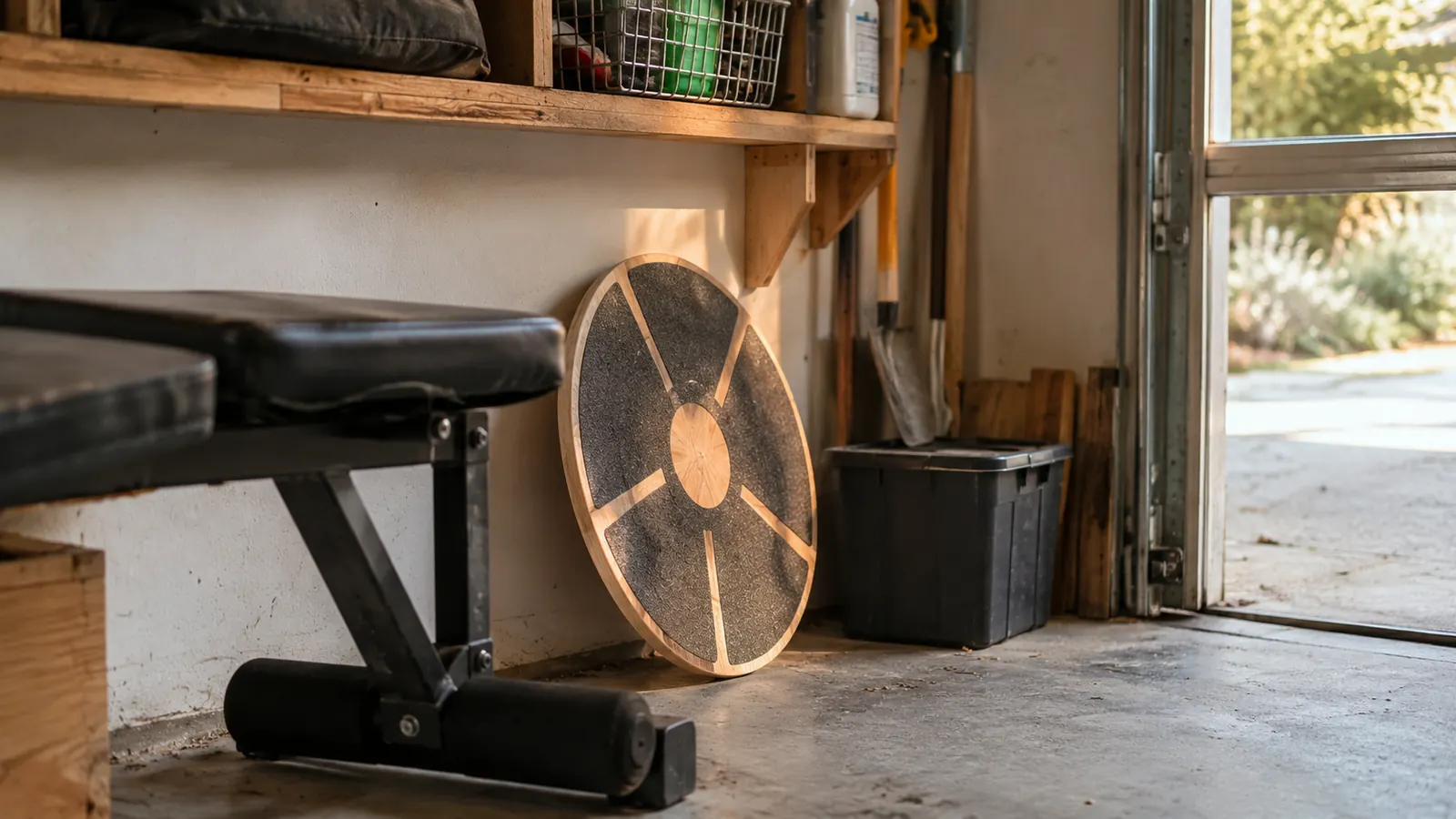
The board itself is simple, which is most of its appeal. A round wooden platform on a central fulcrum that rocks in every direction. No springs, no dials, nothing to break. The no-skid coating on top is the one feature EVERYMILE leans on hardest in the listing, and it is the one I ended up with the most to say about.
The way I fold it into the day matters more than the board itself. My back does not love me standing still with my hips shifted, so I keep my knees soft and my weight centered, and I step off the instant I feel my lower back start to recruit for stability. That sounds cautious, but it is the discipline that let me use it daily without a flare-up. The board does not tell you to do any of that, which is the point of this section: the safe way to use it is learnable, but nobody hands it to you with the manual.
Where the No-Skid Surface Earned Its Keep, and Where It Fades
On a clean, dry floor with a dry bare foot, the no-skid surface is genuinely good. I tested it with socks on day two and slid within twenty seconds, so the coating is doing real work against skin, just not against fabric. Barefoot, though, I never once felt my foot start to drift during the first two months. That part of the promise held.
What the listing does not tell you is that the coating is a wear item and a dust magnet. My garage collects a fine layer of Arizona dust no matter how often I sweep, and dust is exactly what a friction coating hates. Once the top gets dusty, the grip turns slippery before it looks dirty. I now wipe the surface down every few sessions, and it bounces back, but I have watched the coating thin where the ball of my foot lands. Three months in, the high-friction feel is noticeably softer than the day I opened the box.
And here is the honest limit of the whole category: a foam-and-plastic floor can only train you so far. EVERYMILE sells the wobble surface as the feature, but it is doing less work than your ankle is. Once the base grip gets dusty from normal use, you start compensating with your toes and your low back, which is the opposite of the clean ankle work you actually want. Slowing down, wiping the board, and keeping the movements small is what keeps the surface doing its job at month three.
I should also mention the desert twist. On a hot Mesa afternoon my feet are not always perfectly dry, and a slightly damp foot on that coating behaves differently than a dry one, especially once the surface has picked up a film of dust. I learned to check both before I step on, because the factor that decides whether I feel planted is moisture, not the marketing photo of a running shoe. Wipe the board, check your sole, and step on centered. Those three habits do more for me than the no-skid coating does on its best day.
What I Liked
- Genuinely stable grip under a bare, dry foot for the first couple of months
- Simple construction with nothing to assemble or break
- Small enough to live beside a desk, under a couch, or in a closet
- Teaches your ankle and core the small corrections that prevent stumbles
- Cheap enough that daily use is easy to justify
Where It Falls Short
- No-skid coating thins and picks up dust; it is a wear item, not a fixture
- Slippery in socks, so it is barefoot or nothing on most floors
- Slow to feel rewarding; you will look unsteady far longer than the reviews suggest
- Not a strength tool on its own, it needs a routine around it to matter
- Wobble is immediate and untamed, hard to ease into for stiff ankles
The Difficulty Curve Nobody Photographs
Every listing I read made balance work look like a gently rocking surface under a calm foot. The reality is sharper than that. This board rocks on a single central point, and it has no damping at all, so every tiny weight shift is rewarded with uncorrected tilt. That is what makes it a real training tool and also what makes the first week humbling.
For me the progression went in clumps, not a smooth line. I could stand on it for a few seconds almost immediately, then I stayed stuck at shaky for the better part of two weeks before the wobble finally started to settle into small, controllable corrections. Some mornings my ankle felt like it had been doing something, and some mornings it barely moved. If you are expecting a steady climb, you will misread a plateau as failure.
The fix that worked was also the least glamorous: put the board where you cannot avoid it, and make the reward a habit, not a performance. My standing desk was the answer. When the first session depends on walking to a clever corner of the garage, it will not happen. When it is under your feet, it happens before you can talk yourself out of it.
The other thing nobody photographs is how much floor you actually need and how loud the board is on a hard surface. On concrete or tile the central pivot clacks with every correction, and you quickly learn to set it on a mat or a folded towel or your whole household hears your first month. I also slide the board forward and back across the floor to change where the fulcrum sits under my foot, which lets me target the edge of the wobble I am weakest on. Small tricks like those are half the value, and none of them appear in the listing.
The moment I stopped timing myself and just stood on it during my morning coffee was the moment my balance started quietly improving. The board rewards repetition, not effort.
What It Does Not Do, and the Cost of Not Knowing
Here is the part of the honest review that gets cut from most blogs: a balance board is not a strength tool, and it will not shore up a genuinely weak ankle or a shaky sense of steadiness by itself. My lower-back history taught me that the wobble is downstream of the core, the glutes and the standing leg, and this board trains only the last piece of that train. If I had bought it expecting it to carry my balance work alone, I would have been disappointed.
That is the hidden cost of the cheap price, not in dollars but in expectation. The listing leans hard on the no-skid surface because that is the one visual it can sell you on a round piece of wood, and the livelier promise of fixing your balance is implied, not stated. Real balance improvement came for me when the board sat on top of a routine that already included hip work and single-leg stands, not instead of them.
It is also worth saying plainly that the EVERYMILE is a budget training aid, which I think is the right tool for most of us, but it is never going to feel like professional therapy equipment. The coating, the dust, the slow rewards, they are all the honest trade for the price. If you want a wobble surface that never dulls and never needs a wipe-down, you will need to pay considerably more for a foam-stability board instead.
If I have a criticism of the EVERYMILE beyond the surface, it is that a wobble board is one-dimensional. It trains the small stabilizers while you stand in roughly the same place, and that is genuinely useful, but it will not build the single-leg strength it takes to catch yourself on a curb. I pair every board session with a few sets of single-leg stands and some slow hip work, and honestly the board often feels like the garnish on a meal the rest of the routine has to cook. Buy it as one tool in a toolbox, not as the toolbox itself.
Who This Is For
This board is for the adult who is steady but knows balance is quietly slipping, and who wants a cheap, low-skill way to reverse that without a class. If you can stand on one leg for a few seconds and you are not getting younger, this is a solid daily commitment. Keep it beside your desk, wipe it occasionally, give it a month of honest frustration, and it is a genuinely useful little tool that earns back its keep in wobble prevention alone.
Let me also say who in specific will get their money's worth, because these are the people I would buy it for. Someone recovering a normal sense of daily steadiness after a long sedentary stretch. Someone whose balance has quietly slipped with age and wants a low-pressure way to check on it every single day. Someone who already keeps a small training routine and wants a five-minute finisher that is honest about being a finisher. If you recognize yourself in any of those, the wobble is the right medicine. If you do not, keep reading the skip section.
Who Should Skip It
Skip it if you have a recent ankle injury, knee instability, or a diagnosed balance disorder. In those cases untrained wobble is a real fall risk and you want a professional's clearance and a progressional surface, not this. Skip it if you have no routine around it, because a board you step on once and shelve is wasted money no matter how good the grip is. And skip it if you want visible results in two weeks, because that is not a wobble board promise and this one will not keep it. For those of us willing to be a little more patient, the EVERYMILE is a fair deal and an honest tool.
I will be equally specific about who should hand this one back. If you cannot already stand on one foot long enough to tie a shoe, work on that at the counter before you add an unstable surface, because a board does not teach the base skill, it assumes it. And if you buy it hoping the mere presence of it in the room will change your habits, it will sit in the corner like every other piece of equipment in the garage. Tools do not form habits. Only a routine does, and no wobble board can hand you that.
Buy It If You Can Promise the Month. Not Because the Photos Are Pretty.
The EVERYMILE board reward surface durability you cannot inspect in a listing. If the honest tradeoffs above still fit you, check today's price and keep it within arm's reach of wherever you stand most.
Amazon Check Today's Price on Amazon →