I get the same question about these a lot. Someone sees the FEIERDUN DS2 adjustable dumbbells near the top of the search results, reads the four and a half stars and the nearly five thousand reviews, and asks whether the whole thing is too good to be true. I understand that hesitation, because I felt it too. I bought mine thirteen months ago, after a lower-back episode in 2021 forced me to rebuild my garage gym around the stuff my spine could actually tolerate. Since then I have owned adjustable dumbbells from three different brands, including a set that cost several times what this one does. So when I say this is the review to read before you click, I mean it in both directions.
Selling gear to people over fifty is a strange business. Almost everyone wants to sell you back the confidence you used to have. The ads show a trim model curling in a bright studio, and they do not show you what the product is like on week four, when the novelty is gone and all that is left is whether the equipment actually works. That is the part I care about, and I am not going to pretend these dumbbells transformed anything. They did not. They are one honest, imperfect tool. Here is exactly what they do well, what they struggle with, and who I think should buy them.
The Quick Verdict
A very capable, very honest value that covers a whole rack's range for a fraction of the price. Just know that the plastic adjustment hardware gets more judgmental the longer you own it, and the one that rents a barbell doesn't faint at the idea of one is heavy.
Amazon Check Today's Price →Still the pair a studio full of fixed weights can't beat for the money
If your whole hold-up is whether this is real value or review inflation, the answer after six months is: it is real, with real caveats. See the current price and the full spec list on Amazon before you decide.
Amazon Check Today's Price on Amazon →How I've Used It
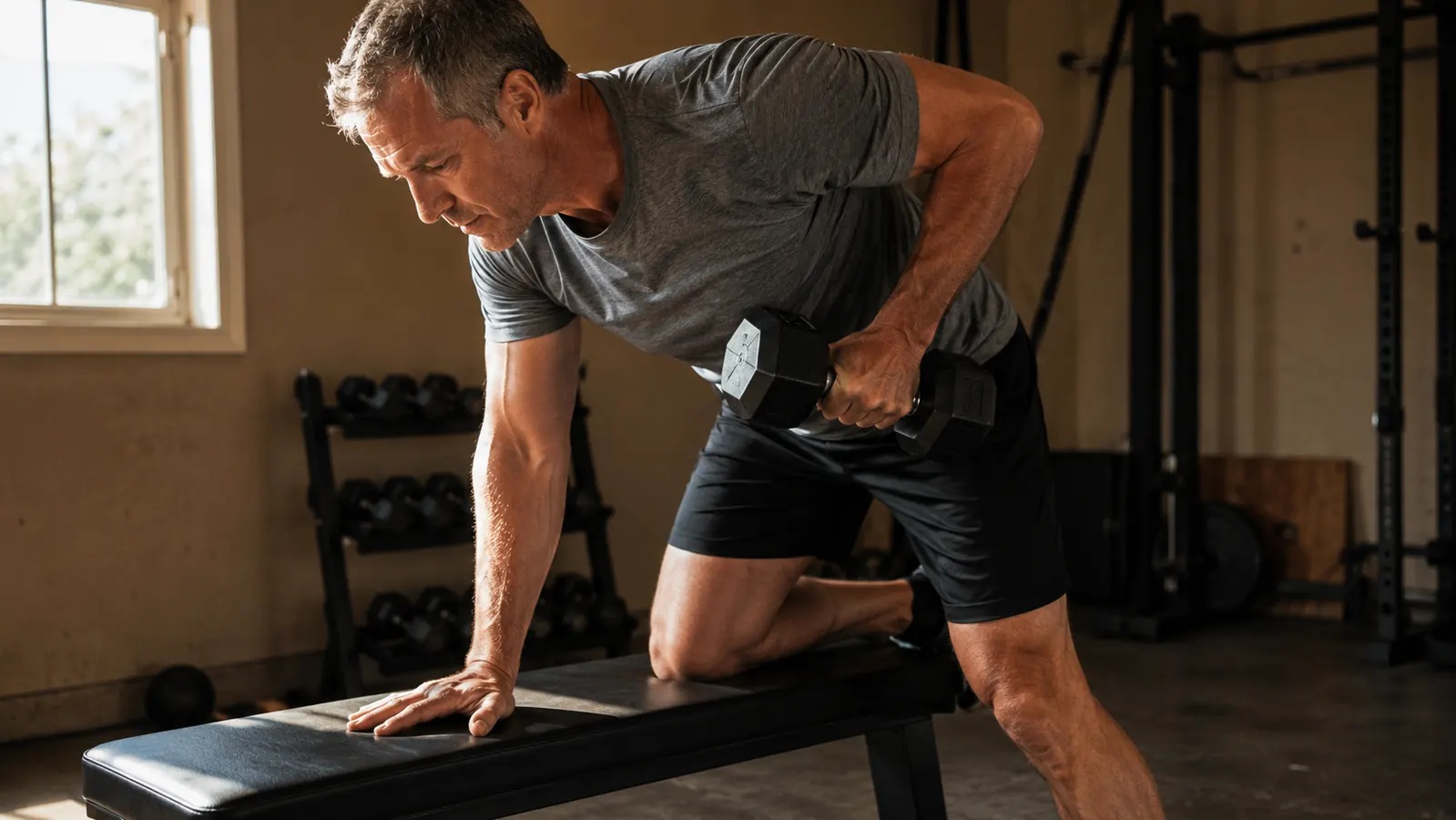
My setup is a squat stand, an adjustable bench and a pair of these dumbbells in a converted single-car garage in Mesa. I train four mornings a week, mostly the same day I used to train before the back told me to stop being stubborn. The DS2 is my whole free-weight setup. I have pressed them over my head, done rows and curls, used the connector as a light deadlift and farmer carry load, and every variation in between. That is the honest appeal in one line: one pair of these replaced a whole rack of fixed dumbbells I no longer have room for.
I test for three things with any equipment at my age and with my back. First, does the resistance start easy enough that I am not loading my spine cold at the bottom of a heavy pick. Second, can I change the weight fast enough that I actually do it, because the fastest way to quit a program is to make it annoying. Third, does the thing still work on month six the way it did on day one. That last one is where most budget gear quietly fails, and it is where the FEIERDUN DS2 has the most to answer for.
I keep a training log, which is the only honest way to review a piece of equipment, because memory flatters everything. The log tells me I have used this pair well over two hundred sessions and never once had to stop a set to fix the weights. That is a better record than the expensive set it shares the garage with. But the log also tells me which small habits I changed to keep it that way, and those habits are the real review.
What the Listing Photo Doesn't Show
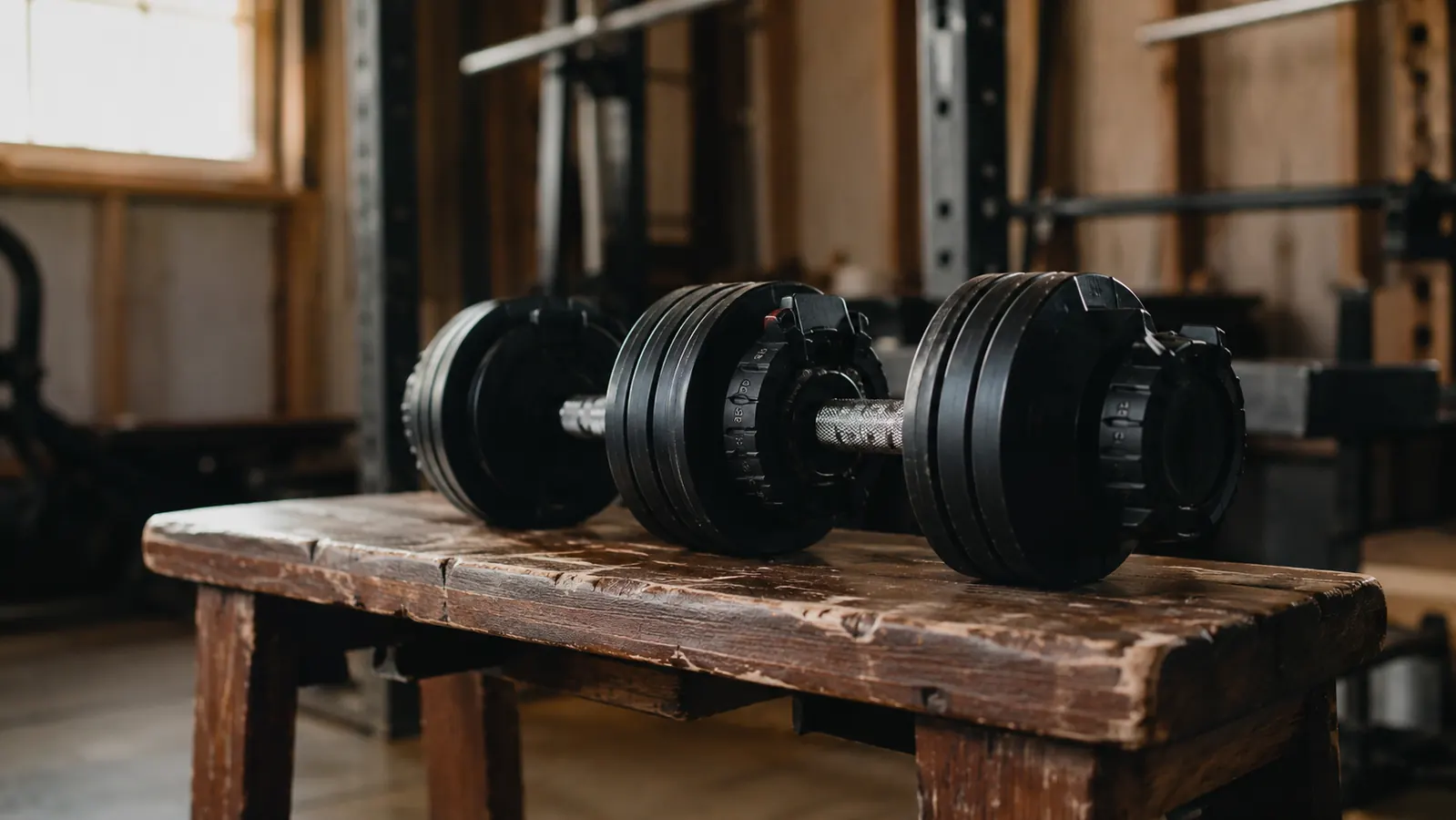
The marketing photo shows clean plates and a tidy, symmetrical barbell, and it looks like a small industrial machine. What it does not show is that most of the hardware you actually touch every day is plastic. The locking collars, the plate housings, the ends you grip to release a weight, all of it is a hard composite. It is sturdy enough for normal use. It is not sturdy enough for the way a lot of people in their twenties use gym equipment, and if you come from a background of dropping cast iron you will need to adjust your habits.
I learned this the week I bought them. I finished a set, took a breath, and let the loaded dumbbell settle onto the bench with a little more enthusiasm than it needed. A hairline mark appeared on the collar of that side, right where the plastic meets the metal. It has not grown in a year, and the mechanism still clicks clean, but that was my warning. You set these down. You do not drop them. If you are the person who occasionally lets a heavy weight land with a thud, this is not the set for you.
The second thing the photos hide is how fiddly the lightweight end of the range is. To hit the smallest settings you keep swapping individual plates on and off the same stem. It is not hard, but it is slower than the dial-up brands, and on a busy superset you feel every one of those fiddly seconds. The heavier settings are big, chunky plates that go on fast, which is partly why the price stays low. It is a tradeoff you should know about before you buy, not after.
There is also the matter of how the plates sit when the set is assembled. On a perfectly flat rack it looks neat, but in the real garage, on a rounded bench arm or a towel, the shape takes a little longer to balance than a fixed dumbbell. That is a small thing. It is also exactly the kind of thing the five-star reviews glide past, so I am putting it in plain sight here.
The Weight That Actually Feels Right
For an ordinary adult who works out at home and is not trying to be a powerlifter, the practical range of this pair is the entire daily load. You are not two-handing a giant deadlift off the floor with these, and that is fine, because at my age I am not either. What matters is that I can start a press set at a weight my back accepts, add a couple of notches for the next set, and get from 30 pounds to 60 pounds without fetching a different tool. That range is the whole point, and it works.
The increments are small enough to progress honestly, which matters more than people think when you are rebuilding strength after an injury. Slow, steady, small loading increases are exactly what a rehabbed back wants to hear. You are not forced to jump a big gap and risk a form breakdown on the way up. The connector bar turns both halves into a light barbell for rows and a low-to-the-floor deadlift, and I have used that more than I expected once I got over the idea that a barbell has to be a heavy steel bar.
The Connector Bar Is Fine. That Is the Review.
The listing leans hard on the word barbell, as in a 5-in-1 set that becomes one. The truth is you should treat the connector as a nice extra, not a second machine. Threading both plates onto the single bar gives you a lighter straight bar for rows, curls, shoulder presses and gentle deadlifts. It handles all of those well. What it does not do is hold up under the heavy, high-arousal use a real barbell gets, because a real barbell is built with far more steel and a load that never rests on plastic ends.
I would also gently push back on the word barbell for what this is. A barbell you can hold at the ends with both hands is exactly half the story. The connector is not adjustable in length, so the widest grip is whatever it ships as, and tall people with a long wingspan get less stretch out of a row than they would from a real bar. Fine for most of us. Just do not buy it expecting a curl bar and a squat bar in one.
A Year Living With the Plastic
A year in, the honest story of the DS2 is a story about maintenance, and I want to be straight about that because nobody puts it in the review count. You keep the locking collars clean and dry, you wipe sweat off the mechanism when you finish, you set the weights down instead of dropping them, and in exchange the set keeps clicking clean set after set. I do that routine more carefully than I ever did with cast iron, because cast iron forgives you and this set does not. That is not a flaw to hide. It is simply what a low price buys.
The wear that did show up is exactly where I expected it. The collars carry scratches from everyday use, the kind you stop noticing by the second month, and the exposed edges on the heavier plates have dulled a little. None of it affects how the set works. But I would be lying if I said it looks new, and the reviews that claim it stays pristine after a year are describing a lighter use life than mine or a bank of overfriendly stars. In a Mesa garage that hits a hundred degrees in the summer, the important thing is that the mechanism has not loosened, and it has not.
Who Actually Writes the Five Stars
When I was deciding whether to buy, I read the five-star reviews first and they nearly talked me into spending more than I planned, because they read like the product can do no wrong. Then I made myself read the two and three star reviews, and that is where the truth lives. The pattern in the lower ones was almost always the same three complaints: the plastic feels cheaper than the photos suggest, the smaller weight settings are slow to load, and the barbell attachment is not a real barbell. Every one of those matched what I found in my first month.
Here is what the five-star crowd and the three-star crowd are really arguing about, and it is not the product, it is the price of it. The people who love this set love what it costs and what it saves in space. The people who hate it expected something closer to a premium adjustable dumbbell for a fraction of the price. Both are right. That is the whole review in one sentence. If you walk in knowing it is a value product with plastic in the places premium gear uses metal, you will think it is an absolute steal. If you walk in expecting premium, you will be disappointed.
The Maintenance Question
There is one more honest note I want to make, because it is the kind of thing the reviewers never say and the kind of thing that determines whether a tool actually gets used. This is a set that rewards routine and punishes neglect. If you can put the collars back square and give the mechanism a wipe when the set is over, you will get years out of it and it will never once get in the way of your workout. If you expect to toss it on the floor at the end of the hour and pull it out next week as if nothing happened, you are going to be disappointed in it faster than you expect.
That single distinction, more than any power number or plate count, is what separates the people who love these from the people who write them off. It is not a property you can see in a photo. It is the part of owning gear that only shows up in month six, which is exactly where this kind of review is supposed to live.
What I Liked
- Turns a whole dumbbell rack's range into one pair, which is the single best space win in home gyms
- The loading range covers practical, honest progress for most home lifters
- Far less of an investment than the dial-up adjustable brands
- The connector lets you do rows and light deadlifts without a second machine
- Fast, tool-free weight changes on the heavier settings
Where It Falls Short
- The adjustment collars and plate housings are mostly plastic, and they show wear
- The barbell claim oversells what the connector realistically supports
- The lightweight end is fiddly, with small plates to swap one at a time
- Not built for dropped loads or aggressive handling at all
- The novelty of the mechanism fades, and what is left is the plastic question, which is the real review
Six months in, the collar on my heavier end still clicks clean. But I do not treat this set the way I treated my cast-iron pairs, for the price, and you cannot either.
Who This Is For
This is for the person who is getting back into strength training at home, who has a room or a corner and not a warehouse, who wants one honest tool that covers presses, rows, curls and lunges without a rack of dumbbells lining the wall. It is for the person who will set the weight down calmly and pick it up again, who is willing to get a one-hundred-pound range for a fraction of an expensive adjustable pair, and who understands that value products ask a little care in return. If you are rebuilding strength after an injury or a long layoff, the small increments are a genuine blessing.
It is also for the person who is honest with themselves about budget. I have watched people talk themselves out of starting because the premium post at the gym made it feel like training has a price of admission. It does not. A pair like this, at this kind of price point, is all the weight an over-fifty beginner needs for the first two years of consistent work. You are not buying a compromise on a strength program. You are buying the entire program.
Who Should Skip It
Skip this if you drop weights. Skip it if you need a real two-hand barbell for heavy work, because the connector is a nice extra, not a substitute. Skip it if you want a set that survives a decade of aggressive use, because the plastic will not. And if you like the idea of an adjustable pair more than the idea of fiddling with collars, spend more on a dial-up brand and stop second-guessing. For everyone else, the plain truth is this: after a year in my garage, the FEIERDUN DS2 is still the pair I reach for every morning, and it is still the honest value it promised to be.
Read this, then decide with your eyes open
It is a value buy with real weak points, and I would buy it again tomorrow for my garage. See today's price and check the current customer photos if you want more evidence before you commit.
Amazon Check Today's Price on Amazon →